Amazon Leo Kenya Guide
Amazon LEO Internet Packages in Kenya
A Kenya-focused explanation of Amazon LEO Internet Packages in Kenya, what is currently known, what is not yet confirmed, and how homes and businesses should think about future LEO satellite internet choices.
- What Amazon LEO Internet Packages in Kenya means
- Amazon Leo versus Starlink in Kenya
- What is known about Amazon Leo
- Possible use cases in Kenya
- What packages might look like
- Installation considerations for Amazon Leo
- Regulatory and buying caution
- How installers should prepare
- Should you wait for Amazon Leo?
- Final recommendation
- Frequently asked questions
- Sources and checks
What Amazon LEO Internet Packages in Kenya means
The phrase Amazon LEO Internet Packages in Kenya points to Amazon’s low Earth orbit satellite internet program, now branded Amazon Leo after the earlier Project Kuiper name. It is a planned satellite broadband network designed to serve homes, businesses, governments, and underserved locations through a constellation of LEO satellites, ground infrastructure, customer terminals, and cloud-connected operations.
For Kenyan readers, the most important point is timing. Amazon Leo is relevant because it may become a future competitor to Starlink and other connectivity options, but it should not be presented as an active mass-market Kenya consumer service with confirmed local packages unless Amazon and Kenyan regulatory sources publish those details.
That distinction matters. Many buyers search for Amazon Leo packages because they want an alternative to Starlink, lower pricing, or business-grade capacity. The honest answer as of May 27, 2026 is that Amazon Leo is worth watching, but Kenya package selection, public consumer prices, order links, installation procedures, and support channels are not yet established in the same way Starlink’s Kenya checkout is established.
Amazon Leo versus Starlink in Kenya
Starlink already has a public Kenya service presence and live Kenya-facing pricing, while Amazon Leo is still moving from network deployment and commercial preparation toward broader service availability. That makes the comparison uneven today. A Kenyan customer who needs internet now will usually evaluate Starlink, fiber, fixed wireless, mobile routers, microwave links, or enterprise satellite options. Amazon Leo belongs in the future-planning column until official Kenya availability becomes clear.
The potential competition is still important. When a second large LEO satellite network enters a market, customers may eventually benefit from more choices, different hardware options, business service models, reseller programs, and price competition. Installers and network planners should therefore understand Amazon Leo before customers begin asking for it at scale.
Starlink’s current advantage is proven retail availability in many markets and a mature user kit ecosystem. Amazon’s potential advantage is its logistics network, cloud infrastructure, enterprise relationships, and ability to integrate satellite connectivity with wider business services. Kenya may eventually see both services compared directly, but today the practical purchasing path is not the same.
What is known about Amazon Leo
Amazon describes Amazon Leo as a low Earth orbit satellite network intended to extend fast and reliable internet to people and organizations in places without dependable connectivity. The program was previously known as Project Kuiper, and Amazon publicly rebranded it as Amazon Leo, a name that refers to low Earth orbit.
Public Amazon information describes customer terminal development, satellite launches, network infrastructure, and future connectivity ambitions. Industry reporting has also discussed enterprise-oriented terminal concepts, including higher-throughput equipment intended for organizations and fixed sites. Those details are useful for understanding direction, but they are not the same as a Kenya retail package sheet.
For Kenyan buyers, the correct planning position is cautious interest. Follow official Amazon Leo announcements, Communications Authority of Kenya licensing updates, and any confirmed local distributor or service partner information. Avoid paying deposits to unofficial parties who claim guaranteed Amazon Leo Kenya packages before official availability exists.
Possible use cases in Kenya
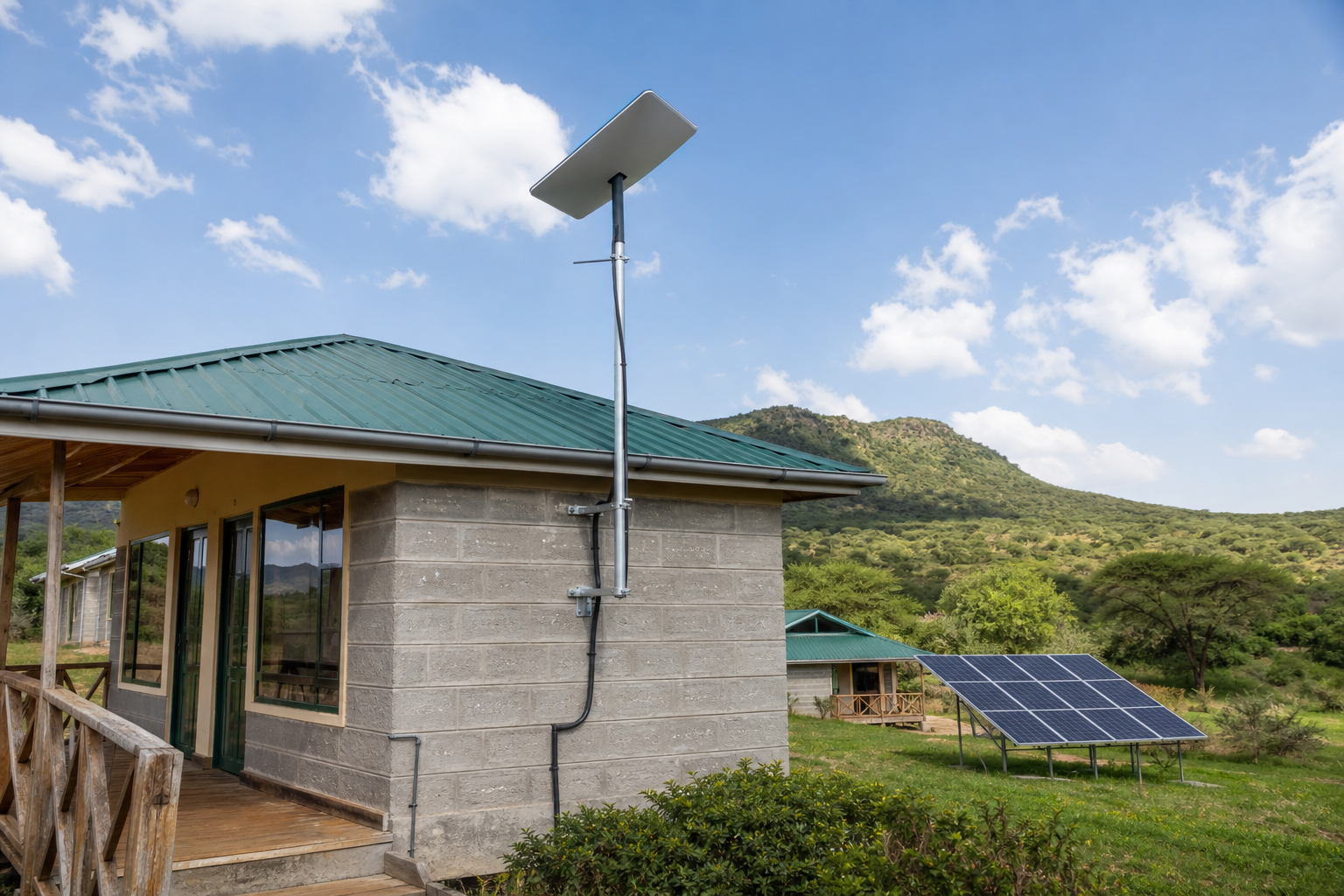
If Amazon Leo becomes available in Kenya, the strongest use cases will likely resemble the broader LEO satellite internet market: rural homes, remote schools, farms, clinics, lodges, construction sites, maritime-adjacent operations, transport yards, mining support, conservation areas, and business continuity links. These are locations where terrestrial broadband is absent, slow, expensive to extend, or unreliable.
The enterprise market may be especially important because Amazon has deep relationships with cloud customers, logistics providers, government agencies, and large businesses. If the service supports business-grade terminals, managed networking, and predictable support, it could become attractive for organizations that need more than a simple consumer link.
Consumer adoption would depend heavily on price, hardware cost, service quality, local support, payment methods, installation ecosystem, and regulatory approval. Kenyan buyers are price sensitive, but they also value uptime, local support, and straightforward activation. A future Amazon Leo package would need to compete on those practical points, not only on brand recognition.
What packages might look like
Because Amazon has not published confirmed Kenya consumer packages for Amazon Leo, any exact package table would be speculative. A responsible guide should explain likely categories rather than invent prices. Future packages could include residential fixed service, portable service, business priority service, enterprise terminals, government or NGO connectivity, and specialized mobility solutions.
The eventual package structure will probably depend on network capacity, country licensing, terminal availability, payment systems, support partnerships, and local demand. Kenya is a strong candidate for satellite internet competition because many regions still need better last-mile connectivity, but that does not guarantee immediate nationwide availability or low prices.
Customers should be cautious with websites that publish exact Amazon Leo Kenya prices before Amazon confirms them. Those pages may be guessing from global information, converting foreign estimates, or using Starlink prices as a proxy. A planning article can discuss possibilities, but a purchase decision should wait for official checkout or verified local partner documentation.
Installation considerations for Amazon Leo
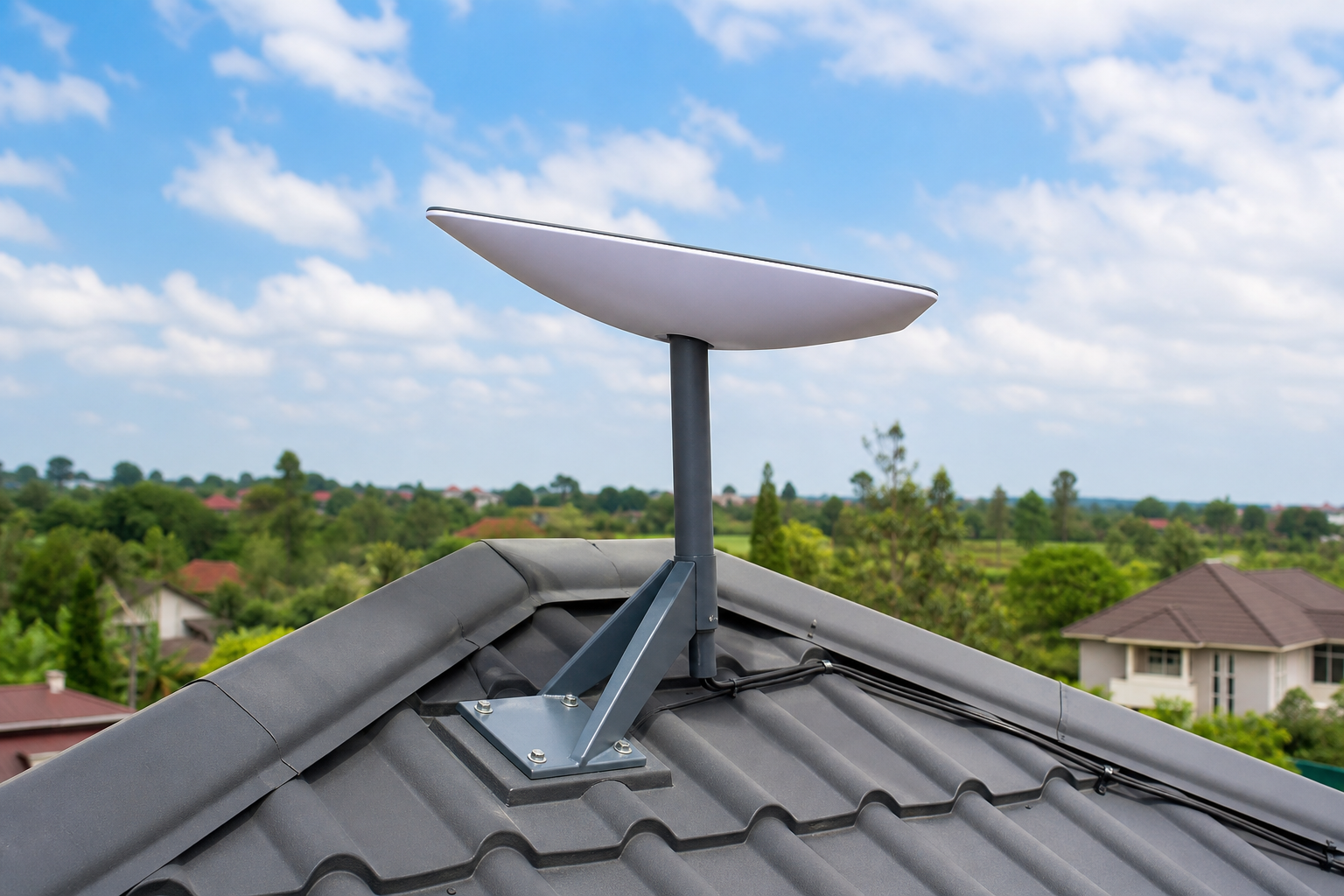
For any satellite internet service, the installation quality matters as much as the subscription. A clear sky view, a stable mount, protected cabling, and sensible router placement determine whether the customer experiences a strong connection or constant interruptions. Many buyers focus only on the monthly plan, but the practical result depends on how the equipment is positioned and tested on the actual property.
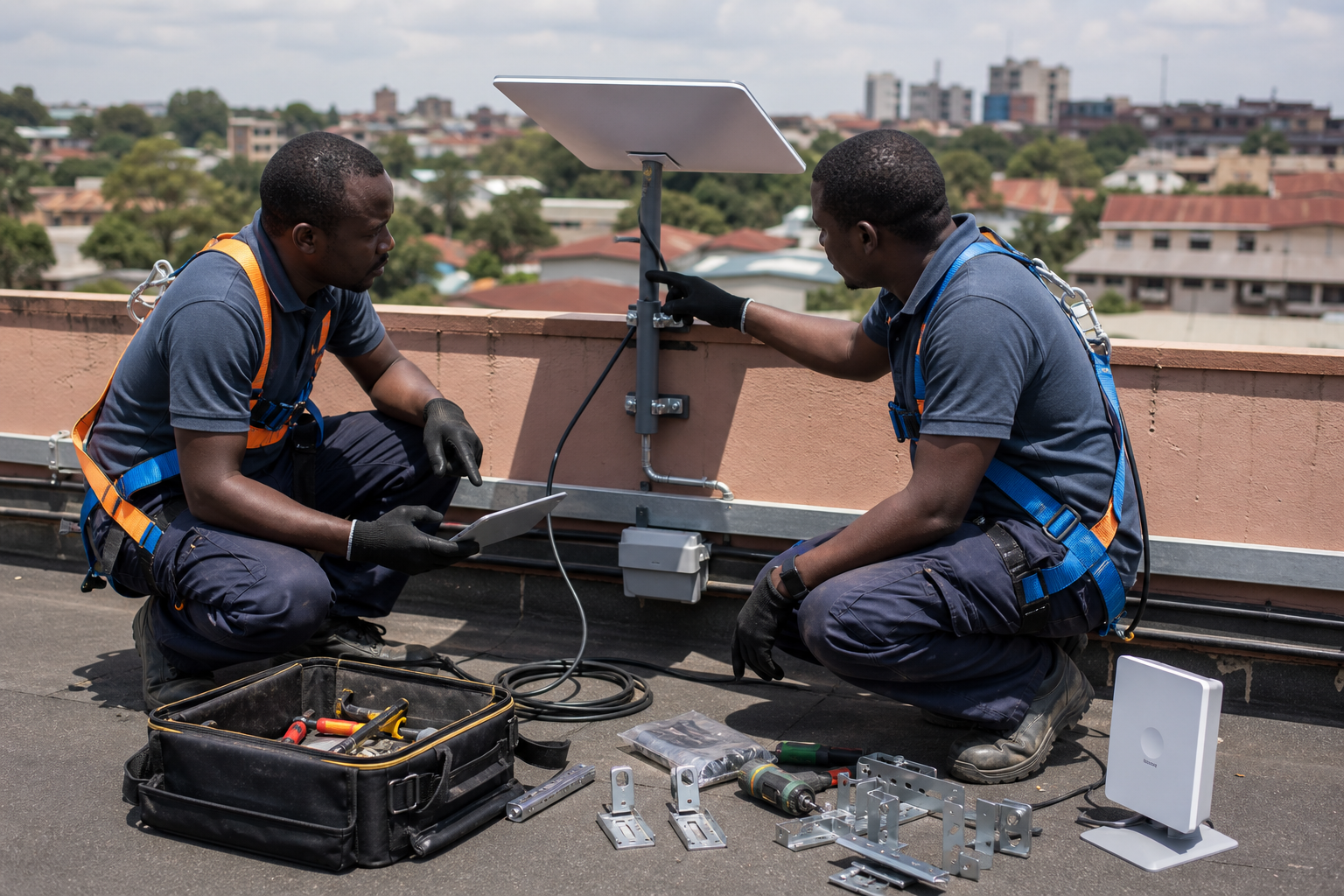
A good installer should check obstruction risk before drilling, explain the cable route before work begins, and test the connection after activation. The best location is not always the easiest place to reach. Trees, nearby buildings, water tanks, roof edges, electric lines, and future construction can all affect the line of sight. That is why a physical survey is useful even when the kit itself is easy to activate.
The indoor network also deserves attention. A satellite terminal can deliver a solid connection to the router, but users may still complain if Wi-Fi does not reach bedrooms, offices, shops, workshops, or outdoor seating areas. For larger premises, the installation plan should include router position, mesh access points, cable extensions, and user expectations for video calls, streaming, point-of-sale systems, security cameras, and cloud applications.
- Confirm that the terminal is approved for Kenya before installation
- Check whether the account is residential, business, portable, or enterprise
- Confirm who provides warranty and support
- Survey the sky view before selecting a mounting point
- Plan router coverage and power backup for the actual site
Regulatory and buying caution
Satellite internet is regulated because it uses spectrum, ground stations, user terminals, and communications services. In Kenya, buyers should avoid importing or operating equipment that is not approved for local use. A service may be technically capable of connecting, but legal operation and support depend on licensing and type approval.
When Amazon Leo becomes commercially available, the safest buying route will be an official Amazon channel or a verified local partner. Customers should confirm the account owner, the service plan, warranty terms, support path, installation scope, and whether the terminal can be moved or resold.
Do not treat social media claims as proof of availability. A real launch should come with official pages, public terms, clear checkout, support channels, and regulatory clarity. Until then, the best approach is to prepare the site and compare existing options rather than paying for uncertain future promises.
How installers should prepare
Installers in Kenya should prepare for Amazon Leo by strengthening the fundamentals of satellite internet work: obstruction checks, roof safety, pole mounting, weatherproof cable routes, router configuration, mesh Wi-Fi, surge protection, power backup, and customer handover. Those skills transfer across LEO systems even when hardware details differ.
Installers should also avoid overpromising. If Amazon Leo is not yet available, the honest answer is that it is a future option, not a current installable package. That builds trust and protects customers from speculative purchases.
When official details arrive, installers will need to learn the terminal form factors, mounting accessories, activation process, app tools, account controls, warranty process, and performance diagnostics. The companies that prepare early but communicate honestly will be best positioned to serve customers.
Should you wait for Amazon Leo?
If your home or business needs internet now, waiting for an unconfirmed launch can be costly. Lost productivity, poor communication, unreliable payments, and weak customer service can cost more than the difference between competing satellite packages. In that case, evaluate Starlink or other available providers today and treat Amazon Leo as a future comparison.
If your current internet is acceptable and you are planning a future remote site, it may be sensible to watch Amazon Leo developments before committing to a long-term design. This is especially true for businesses that may need multiple sites, enterprise support, or integration with cloud systems.
The best answer depends on urgency. Immediate connectivity problems need immediate solutions. Future expansion plans can keep Amazon Leo on the shortlist while waiting for official Kenya pricing and availability.
Final recommendation
For Amazon LEO Internet Packages in Kenya, the responsible message is clear: Amazon Leo is an important upcoming LEO satellite internet network, but Kenyan customers should not treat it as a confirmed retail package category until official Kenya details are published. Use current providers for urgent needs, monitor official Amazon and Communications Authority information, and avoid speculative deposits.
When Amazon Leo does arrive, compare it on total cost, hardware price, data policy, latency, support, installation requirements, payment methods, and account control. Do not compare only the headline monthly fee.
Satellite Internet Installers can help customers evaluate current options and prepare sites for future LEO connectivity. The installation fundamentals remain the same: clear sky, secure mount, protected cable, stable power, and a network layout that matches the people using the connection.
Frequently asked questions
Is Amazon Leo available in Kenya now?
As of May 27, 2026, public consumer availability and Kenya retail packages have not been confirmed in the same way Starlink Kenya plans are visible. Customers should wait for official Amazon Leo and Kenya regulatory confirmation before paying for any package.
Is Amazon Leo the same as Project Kuiper?
Yes. Amazon publicly rebranded Project Kuiper as Amazon Leo, referring to the low Earth orbit satellite network behind the service.
Will Amazon Leo be cheaper than Starlink?
That cannot be confirmed without official Kenya pricing. Competition may influence pricing later, but exact Kenya packages should not be guessed before launch.
Can installers prepare for Amazon Leo?
Yes. Site survey, safe mounting, cable protection, power planning, and Wi-Fi design skills will remain useful. Hardware-specific activation and support steps should wait for official launch documentation.
Should I wait for Amazon Leo instead of buying Starlink?
If you need internet now, evaluate currently available options. If your need is future-dated and not urgent, monitor Amazon Leo announcements and compare once official Kenya packages are published.
Future planning for Amazon LEO Internet Packages in Kenya
Planning for Amazon Leo in Kenya should be disciplined rather than speculative. The right approach is to prepare the site and the decision criteria without pretending that unconfirmed packages already exist. A home, lodge, farm, school, clinic, or field office can decide where a satellite terminal would probably be mounted, where the router should sit, how power backup would work, and which rooms or buildings need coverage. Those preparations are useful whether the final provider is Amazon Leo, Starlink, or another satellite network.
A serious buyer should also define the acceptable monthly budget, the maximum hardware budget, the minimum performance requirement, and the support expectation. For a home, that may mean stable video calls and streaming. For a business, it may mean payment systems, cloud software, guest Wi-Fi, and security cameras. For an NGO or field operation, it may mean uptime, portability, power resilience, and the ability to support multiple users in a remote location. These requirements will make it easier to compare Amazon Leo when official Kenya details arrive.
Businesses should prepare a procurement checklist. It should ask whether the service is licensed for Kenya, whether equipment is type approved, who owns the account, who provides warranty support, whether invoices are available, whether there is a business support channel, and whether service-level terms are offered. A future satellite package can look attractive in marketing material but still fail procurement if support, compliance, and ownership are unclear.
Installers should prepare by improving survey discipline. The best installer will not simply wait for a new brand and then learn on the job. They will already understand safe roof work, cable protection, power backup, Wi-Fi planning, mesh design, grounding considerations where applicable, and customer handover. When Amazon Leo hardware details become public, those installers can add hardware-specific training to an already strong foundation.
How to compare Amazon Leo when packages arrive
When official packages are published, do not compare only the monthly price. Compare the full ownership cost: terminal price, shipping, taxes, activation fees, installation materials, mounting accessories, support charges, payment method, data policy, portability rules, business terms, and cancellation options. A cheaper monthly figure can become expensive if the hardware is costly, support is weak, or the package does not fit the site.
Performance should be compared in practical terms. Look at download speed, upload speed, latency, consistency during busy hours, weather resilience, router quality, app diagnostics, and the experience of real applications. A business that uses cloud backups and CCTV may care more about upload and stability than peak download. A gamer or remote worker may care more about latency and packet loss. A lodge may care more about many users sharing the connection at night.
Support is another major comparison point. Customers should ask whether support is local, online only, through Amazon, through a partner, or through a managed installer. They should ask how replacement hardware is handled, how long support responses take, and whether business customers receive better escalation. Satellite internet is often used in places where connectivity is critical, so support quality matters as much as the advertised technology.
Finally, compare installation ecosystems. A service becomes more useful when trained installers, accessories, mounts, cables, routers, and support procedures are available locally. Even excellent hardware can frustrate customers if no one nearby can install it safely or troubleshoot it. Kenya’s satellite internet market will mature fastest when providers, installers, and customers all understand the practical side of deployment.
Buyer protection and misinformation risks
New satellite brands attract speculation. Some pages may publish prices before they are official, and some sellers may claim early access without proof. Customers should protect themselves by asking for official links, written terms, company registration details, receipts, warranty information, and proof that the equipment is legal to operate in Kenya. If a seller cannot explain the account ownership model, support path, and refund terms, the buyer should pause.
Deposits deserve special caution. Paying a deposit for equipment that is not officially available can create risk if launch timing changes, regulatory approval takes longer, or the seller cannot obtain hardware. A legitimate pre-order should have clear terms, a refund policy, and a direct relationship to an official provider or authorized partner. Without that, the customer may be financing uncertainty.
Businesses should document approval before installation. A school, hotel, clinic, farm, or office should know who approved the service, who will pay the bill, who manages the account, who can change the plan, and who is responsible for support. This avoids confusion when staff change or when the connection becomes mission critical.
The safest position is simple: follow official Amazon Leo information, follow Kenyan regulatory updates, and use professional installers who are honest about what is available today versus what may arrive later. That approach lets customers benefit from future competition without becoming victims of rumor-driven selling.
Amazon LEO Internet Packages in Kenya: complete SEO guide
Amazon LEO Internet Packages in Kenya is the primary keyword for this guide. Customers searching for Amazon LEO Internet Packages in Kenya want clear prices, buying advice, installation guidance, performance expectations, and local support information in one place.
This Amazon LEO Internet Packages in Kenya page explains how Amazon LEO Internet Packages in Kenya relates to homes, offices, lodges, farms, schools, shops, construction sites, and remote locations in Kenya. The goal is to make Amazon LEO Internet Packages in Kenya useful for real buyers, not only for search engines.
For better search relevance, Amazon LEO Internet Packages in Kenya appears in the page title, the opening section, the service discussion, the FAQ context, and the image alt text. That helps Google understand that this page is specifically about Amazon LEO Internet Packages in Kenya, while the article still gives practical advice about packages, prices, installation, latency, support, and buying decisions.
If you are comparing Amazon LEO Internet Packages in Kenya, check the official provider page, confirm the latest plan, inspect your site for obstruction, and choose a clean installation route. A successful Amazon LEO Internet Packages in Kenya setup depends on the package, the dish location, the cable path, the router position, and the number of people who will use the service.
Satellite Internet Installers can help with Amazon LEO Internet Packages in Kenya planning, Amazon LEO Internet Packages in Kenya site surveys, Amazon LEO Internet Packages in Kenya installation, Amazon LEO Internet Packages in Kenya router placement, and Amazon LEO Internet Packages in Kenya troubleshooting for residential and business customers.



Sources and checks
This page was prepared for Satellite Internet Installers using current public information and installation experience. Starlink pricing and plan names were checked against the official Starlink Kenya website, which currently presents Residential Lite from KES 4,000 per month and Residential from KES 6,500 per month. Roam details were checked against Starlink’s help center, which lists Roam plan structures and explains countrywide mobile use, in-motion use, and the ability to change plans. Starlink technical expectations were checked against Starlink specifications and latency material, including public guidance that land latency is commonly stated in the 25-60 ms range, with performance varying by location, congestion, obstruction, and network routing.
Amazon Leo details were checked against Amazon’s official Amazon Leo information, including the rebrand from Project Kuiper to Amazon Leo and Amazon’s description of a low Earth orbit satellite network intended to extend broadband to underserved places. As of May 27, 2026, this page does not treat Amazon Leo as an active Kenya retail service with confirmed local consumer packages because public Kenya pricing and consumer checkout are not yet established.
Because satellite internet is a live service category, prices, taxes, hardware availability, fair use terms, and service areas can move quickly. Treat every figure as a planning reference, not a final invoice. Before ordering, confirm the live checkout on the official provider website and request a site survey when the property has trees, tall buildings, complex roof access, long cable routes, or business-critical connectivity needs.
Need help choosing or installing satellite internet?
Satellite Internet Installers can help you compare the plan, check the site, mount the equipment, route the cable, and test the connection after activation.