Starlink Mini Packages Kenya
Starlink Mini packages Kenya is one of the most searched satellite internet topics in Kenya because buyers want reliable home WiFi, clear monthly pricing, affordable packages, safe hardware buying options, and installation help. This guide explains portable Starlink Mini use, travel, students, field teams, power, mounting, and package selection in practical language for Kenyan homes and businesses.
A detailed guide to Starlink Mini packages Kenya, portable kit costs, 50GB and roaming options, home use, travel use, and setup support.
Why Starlink Mini packages Kenya matters in Kenya
Starlink Mini packages Kenya has become a serious option for households, rural homes, farms, lodges, schools, construction sites, and small offices that cannot get reliable fibre. The value is not only speed. The real advantage is that the service can work far beyond normal last-mile networks when the kit has clear sky view, stable power, correct activation, and a sensible WiFi layout inside the property.
Kenyan buyers are also comparing satellite internet with mobile routers, fixed wireless, fibre, and shared estate connections. Starlink Mini packages Kenya should be judged by the full job it must do: video calls, online classes, streaming, cloud backups, CCTV uploads, point-of-sale systems, and daily family browsing. A plan that looks cheap can become frustrating if the data allowance is too small, while a larger plan can be wasteful for a light user.
As of June 3, 2026, Starlink’s Kenya service-plan page lists Residential 50GB at KSh 1,300 per month, Residential Lite at KSh 4,000 per month, Residential at KSh 6,500 per month, and Roam 50GB at KSh 6,500 per month. Hardware and marketplace kit prices change often, so the safest approach is to confirm the active checkout price, the kit version, the service plan, delivery charges, and installation support before paying. That is why a local installation assessment is useful. A good installer checks roof access, cable entry, WiFi dead zones, obstructions, drainage, safe mounting, router placement, and whether the household needs the Standard kit, Mini kit, Residential, Residential Lite, Residential 50GB, or Roam 50GB.
Starlink Mini packages Kenya plan comparison for Kenyan users
The KSh 1,300 Residential 50GB option is the entry point many people search for because it lowers the monthly barrier. It is best for light browsing, messaging, email, school research, occasional calls, and disciplined households that can monitor usage. It is not the best fit for homes that stream all evening, run many smart TVs, download games, or support several remote workers at once.
Residential Lite at KSh 4,000 per month is positioned for households that want unlimited data but can accept slower performance during peak hours. Standard Residential at KSh 6,500 per month suits heavier home use where multiple people need a stronger experience. Roam 50GB at KSh 6,500 per month is useful for portable use, travel, field work, and temporary locations, but its rules are different from fixed home service.
The right choice depends on location, data habits, and whether the kit will stay at one address. Starlink Mini packages Kenya users who install at a permanent home usually prioritize a clean roof mount, short cable path, and strong indoor WiFi. Users who move between sites should think about Mini portability, power banks, vehicle power, quick setup, safe storage, and plan flexibility.
Hardware, Jumia listings, and local kit buying
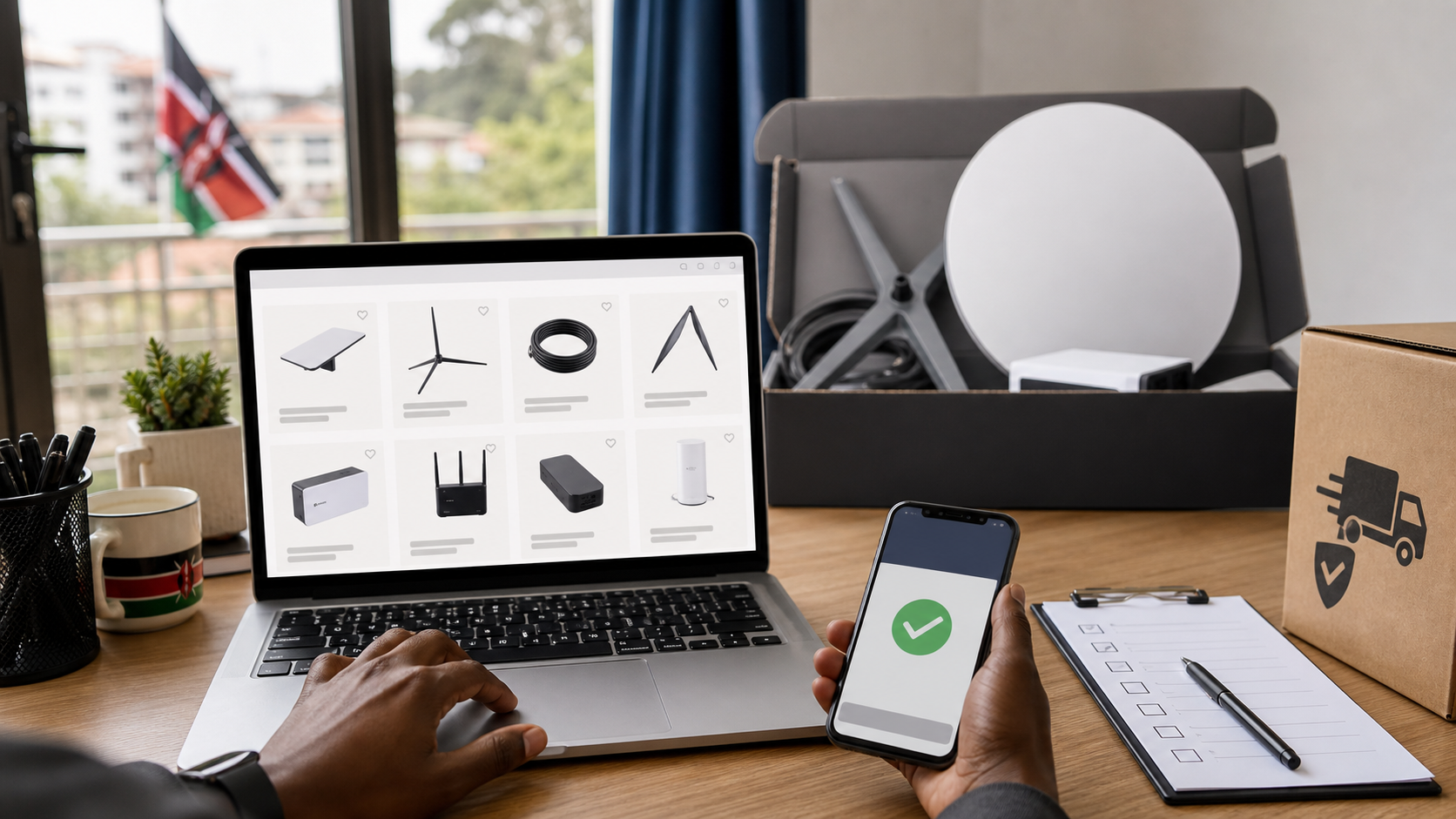
Many Kenyan shoppers check Jumia because kit listings are visible, delivery is familiar, and there are several Standard and Mini options. Jumia prices can vary by seller, kit generation, stock, promotions, and accessories included. Recent public listings have shown Standard kits around the KSh 49,900 to KSh 56,500 range and Mini kits around the KSh 40,000 to KSh 42,000 range, but marketplace prices move quickly.
When comparing Starlink Mini packages Kenya hardware, check whether the listing is a Standard kit, Gen 3 kit, Mini kit, Ethernet adapter, cable, mount, or accessory. Do not assume every Starlink-related product is a complete internet kit. Confirm seller rating, return terms, delivery fees, warranty route, contents in the box, and whether the unit can be activated in Kenya without account transfer problems.
A low hardware price is only useful if the kit activates cleanly and can be installed safely. Buyers can compare local providers such as Satellite Internet Installers, Starlink Kenya, how to purchase Starlink bundles in Kenya, Spacelink Kenya, official Starlink Kenya service plans, Jumia Kenya Starlink listings. These links help you understand package language, bundle purchase steps, local support, and installation options before committing money to a kit or a monthly plan.




Installation checklist for Starlink Mini packages Kenya
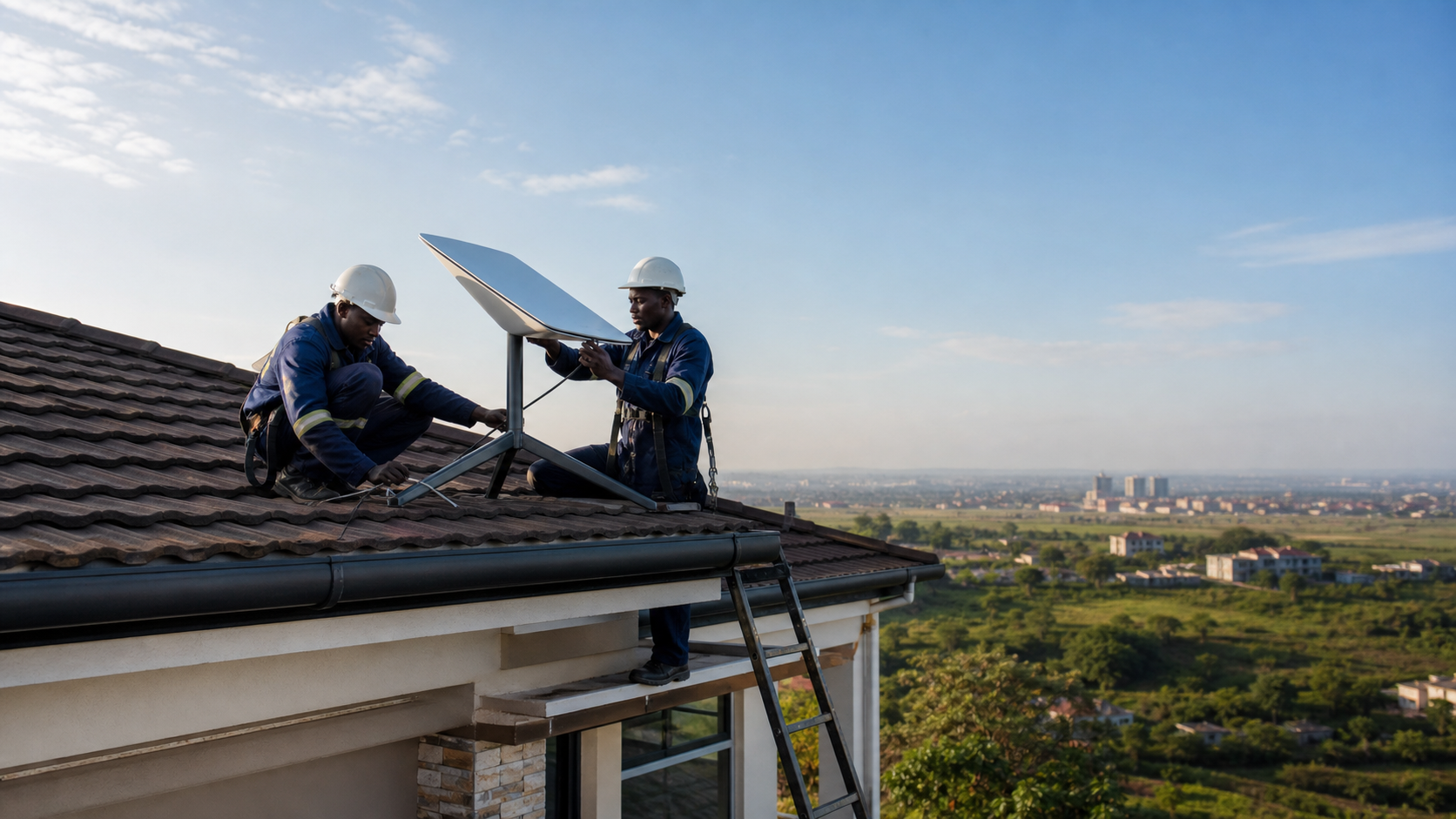
Installation quality has a direct effect on the customer experience. The dish needs a clear view of the sky, not just a convenient place on the wall. Trees, neighboring buildings, water tanks, metal roofs, and steep roof angles can create interruptions. A proper installation starts with a sky-view check, then chooses a mount that can handle wind, rain, heat, and future maintenance.
Cable routing should be neat, weather resistant, and serviceable. Good practice includes avoiding sharp bends, keeping cable paths away from places where people step, sealing wall entries, protecting outdoor runs, and labeling the route for future troubleshooting. Indoors, the router should be placed where WiFi can reach the rooms that matter most, not hidden in a corner simply because it is close to the cable entry.
For larger homes, maisonettes, offices, lodges, and compounds, Starlink Mini packages Kenya may need mesh WiFi or wired access points. The satellite link may be fast at the router, but weak indoor WiFi can make users think the Starlink connection is poor. A post-install speed test near the router and in key rooms helps separate satellite performance from WiFi coverage problems.
Who should choose Starlink Mini packages Kenya
Starlink Mini packages Kenya is a strong fit for homes outside reliable fibre coverage, remote farms, coastal properties, lodges, construction camps, schools, churches, clinics, and small businesses where mobile data is expensive or inconsistent. It also makes sense as backup internet for businesses that cannot afford downtime. In such cases, the monthly plan should match the cost of lost connectivity, not just the cheapest available package.
Urban users should compare Starlink with fibre before buying. Fibre can be cheaper for heavy unlimited use where it is stable and already available. Starlink becomes more attractive when fibre installation is slow, fixed wireless is congested, outages are frequent, or the property is outside wired coverage. The decision is practical: choose the connection that gives the best reliability at the actual address.
For students, remote workers, and small teams, the key question is usage pattern. Video calls and learning platforms need stable latency and enough data. Streaming and large downloads consume data quickly. CCTV cloud uploads and smart home devices can also add background usage. Starlink Mini packages Kenya works best when the package is selected after a realistic monthly usage estimate.
Starlink Mini packages Kenya and the KSh 1,300 package
The phrase Starlink Kenya Packages 1,300 usually refers to the Residential 50GB plan. It is important because it gives a lower monthly entry point than unlimited plans. It is not a magic unlimited connection at KSh 1,300. Treat it as a controlled-data package for light users or backup use. Heavy users should expect to upgrade or choose a larger plan from the beginning.
A 50GB monthly allowance can work for browsing, school assignments, WhatsApp, email, occasional Zoom calls, and selective streaming. It can disappear quickly with daily HD video, game downloads, cloud backups, app updates, and multiple smart TVs. Households choosing the KSh 1,300 option should set device expectations and check usage regularly in the Starlink account or app.
For a permanent home, the KSh 1,300 package may be a good starter plan if the user wants to test satellite internet before committing to a higher monthly cost. For a busy family, business, or lodge, Residential Lite or Residential is usually a better operational choice. The cheapest plan is only cheap if it still covers the work the connection must perform.
Starlink Mini packages Kenya with Starlink Mini
Starlink Mini packages Kenya are popular because the kit is compact and easier to move than a full fixed installation. Mini suits field teams, travelers, outdoor events, students moving between homes, emergency backup users, and people who need temporary internet at different locations. It is also useful where power options are limited, provided the user plans battery capacity carefully.
The Mini decision is not only about hardware size. The buyer should consider the plan rules, whether fixed home service or Roam service is required, how often the kit will move, and how many devices will connect. A Mini kit can be convenient, but a permanent home with many users may still be better served by a Standard kit and a fixed residential plan.
For outdoor and travel use, protect the kit from theft, rain exposure beyond intended use, cable strain, unstable surfaces, and poor power. Keep a small checklist for the dish, cable, router or integrated WiFi, power source, mounting stand, and account login. Starlink Mini packages Kenya works more smoothly when portability is planned rather than improvised.
Common mistakes to avoid with Starlink Mini packages Kenya
The first mistake is buying hardware before confirming the plan and activation path. A kit must be usable in Kenya, linked correctly, and ready for the selected service. The second mistake is installing the dish where it is easy rather than where it has clear sky. The third mistake is ignoring indoor WiFi and blaming the satellite connection for weak coverage behind thick walls.
Another common mistake is comparing only monthly prices. The real cost includes hardware, delivery, installation, mounting accessories, surge protection, backup power, mesh WiFi, extra cable where needed, and future support. For remote sites, the cost of a second visit can exceed the price difference between a quick installation and a careful one.
Buyers should also avoid assuming that all online claims remain current. Starlink package names and prices can change, sellers can run promotions, and availability can vary by area. Always check the official checkout page and current seller details before paying. This article uses June 3, 2026 pricing signals, but the final price is the one shown at checkout on the day you buy.
Monthly budgeting for Starlink Mini packages Kenya
A serious budget for Starlink Mini packages Kenya should include two separate numbers: the one-time startup cost and the recurring monthly cost. The startup cost may include the kit, delivery, roof mount, pole mount, cable protection, wall entry materials, surge protection, backup power, and installation labor. The monthly cost is the selected Starlink service plan, plus any extra data or network support the user chooses later.
For many Kenyan homes, the biggest mistake is treating the monthly plan as the only cost. A properly installed satellite internet system is more like a small utility project. If the home needs a strong signal in bedrooms, a detached office, servant quarter, shop front, or guest wing, the WiFi extension cost should be planned early. That prevents the household from buying the right satellite plan but still getting poor experience indoors.
The best budgeting method is to write down the first-month cost, the expected monthly plan, and the cost of optional upgrades. A light user can start with the KSh 1,300 50GB plan and move up if usage grows. A heavy household may save time by starting with Residential Lite or Residential. For a business, the cost of downtime, lost sales, and failed meetings should matter more than the cheapest package on paper.
Speed, latency, and real-world expectations for Starlink Mini packages Kenya
Starlink Mini packages Kenya can feel much faster than congested mobile data in remote areas, but performance still depends on sky view, network load, WiFi placement, and the selected plan. Users should expect the best results when the dish is free from obstructions and the router or mesh system is positioned for the rooms where people actually work, study, and stream.
Latency is important for video calls, online classes, point-of-sale systems, and some gaming. Starlink is usually strong for these uses compared with older satellite internet, but no connection is perfect every minute of the day. Heavy rain, blocked sky view, peak-hour congestion, and weak indoor WiFi can all affect the experience. Testing at different times helps the user understand the normal performance range at the address.
A practical installer will test the connection at the router and then test the WiFi in key rooms. If the router speed is good but a bedroom, office, or shop counter is slow, the fix is usually a WiFi design issue rather than a Starlink package issue. This is why Starlink Mini packages Kenya should be installed and tested as a complete network, not simply plugged in and forgotten.
How to get the best result from Starlink Mini packages Kenya
Start with the problem you want to solve. If the home needs basic browsing, the KSh 1,300 50GB plan may be enough. If the household streams, works remotely, and has many users, compare KSh 4,000 Residential Lite and KSh 6,500 Residential. If the kit must travel, compare Roam and Mini options. If uptime matters, plan backup power and a tidy network layout.
Then choose the kit and installation path. A Standard kit on a proper mount is usually the stable home choice. A Mini kit is the flexible travel choice. A professional installer can help with roof safety, obstruction checks, alignment, cable routing, wall entry sealing, and WiFi testing. Local support matters most when the site is remote or the household cannot troubleshoot alone.
Finally, review performance after the first week. Check usage, peak-hour speed, video call stability, WiFi coverage, and whether the package still fits. Starlink Mini packages Kenya should be treated as an installed internet system, not just a gadget. The best long-term setup is the one where the kit, plan, power, mounting, and indoor network all match the property.
FAQs about Starlink Mini packages Kenya
Is Starlink Mini packages Kenya available everywhere? Starlink is designed for wide coverage, but service availability, plan options, and capacity can vary. Check the Starlink Kenya checkout page for the exact address before buying.
Can I buy on Jumia and activate later? Many users shop on Jumia, but you should confirm the kit version, seller, return terms, and activation route. Hardware purchase and monthly service activation are separate steps.
Does the KSh 1,300 package include hardware? No. The monthly plan is separate from the kit price, delivery, installation, mounts, and accessories.
Do I need an installer? Some users self-install, but professional installation is useful for roof mounting, cable routing, obstruction checks, WiFi coverage, and avoiding repeat visits.
Next steps for Starlink Mini packages Kenya
If you want Starlink Mini packages Kenya for a home, school, lodge, office, farm, or backup connection, compare the official plan page, Jumia hardware listings, and local installer support before paying. A good decision balances monthly price, data needs, hardware cost, installation safety, and future support.
Related internal guides: Starlink Home Internet Kenya | Starlink Kenya Price Per Month | Starlink Kenya Packages 1,300 | Starlink Kenya Price Jumia. These pages connect the main buying questions: home use, monthly prices, the KSh 1,300 package, Jumia kit pricing, and Mini packages in Kenya.