amazon leo internet service in Kenya
amazon leo internet service in Kenya is a developing topic, not a finished consumer product that can be ordered everywhere today. Amazon Leo is Amazon’s low Earth orbit satellite broadband network, previously known as Project Kuiper. It is intended to bring fast internet to customers and communities beyond the reach of existing networks. For Kenya, that promise is important because the country has strong fibre and mobile internet in some areas, but many rural homes, farms, schools, lodges, and work sites still struggle with reliable connectivity.
As of 2 June 2026, Amazon has not published full Kenya service availability, local plan pricing, or a public consumer order page for Amazon Leo in Kenya. The network is progressing through satellite deployment and enterprise preview, and the broader commercial rollout is expected in phases. This article explains what Kenyan users should expect, how to prepare, and how Amazon Leo may fit alongside Starlink, fibre, 4G, and 5G.



amazon leo internet service in Kenya: current availability
The current status is best described as watch, prepare, and verify. Amazon Leo has launched hundreds of satellites and is testing services with selected enterprise customers, but a Kenya-specific public service launch has not been confirmed. Users should monitor official Amazon updates and local installer announcements, while avoiding claims that suggest guaranteed activation before Amazon opens service in the country.
For official network progress, Amazon’s mission update page is a useful reference because it reports actual launches and satellite counts. For local market context, visit Amazon Internet Kenya, Orbit Internet Kenya, and the regional guides for Amazon Leo installation in Nairobi and Amazon Leo installation in Kisumu. These external resources can help you follow local readiness, but final availability should still be checked against Amazon’s official ordering channels.
amazon leo internet service in Kenya for rural and urban users
The value of amazon leo internet service in Kenya will differ by location. In urban Nairobi, Mombasa, Nakuru, Kisumu, and Eldoret, many customers already have fibre or strong mobile internet. There, Amazon Leo may be most useful as backup connectivity, a business continuity link, or a solution for sites with poor last-mile service. In rural counties, conservancies, farms, schools, lodges, border areas, and construction sites, it may become a primary broadband option.
Kenya’s internet gap is not only about whether a town has a provider. It is about whether a specific property has reliable service at the exact place where people work or live. A home a few kilometres outside fibre coverage can have a completely different experience from a town centre office. LEO satellite service is attractive because the installation depends more on sky visibility than nearby cable infrastructure.
What service will include when it launches
A complete Amazon Leo service in Kenya would likely include a customer terminal, router or network interface, service subscription, account management, support, and installation guidance. For business customers, Amazon has also discussed enterprise features, private networking, cloud connectivity, and priority support. Those features may not all be available in every country or plan at launch.
Amazon’s published information on Leo Ultra shows that the enterprise side of the service is being designed for demanding environments. The official Amazon Leo Ultra announcement describes high speed terminal capability and private networking features. Kenyan enterprises should watch that closely if they operate in energy, logistics, aviation, hospitality, agriculture, media, NGOs, county services, or remote infrastructure.
Residential users should wait for consumer details. The consumer package may have different equipment, speeds, support terms, and prices from enterprise plans. It may also have rules for fixed-site use, mobility, data priority, fair use, or regional roaming. These details matter because they determine whether the service is suitable for a family home, a rental property, a school, or a small business.
How Amazon Leo could fit the Kenyan market
Kenya has a wide spread of internet needs. Some users simply need stable WhatsApp, email, and browsing. Others need cloud accounting, CCTV, online classrooms, telemedicine, video meetings, or guest WiFi. Amazon Leo could serve several of these segments if the final plans are priced and supported well. The strongest opportunity is likely in places where existing networks are unreliable or expensive to extend.
For immediate service comparisons, see our Starlink Kenya installation page and our guide on how much Starlink costs in Kenya. Those pages show the current practical baseline for LEO internet in the country. Amazon Leo will need to compete not only on speed, but also on equipment cost, monthly fee, installation support, uptime, account management, and local availability.
Businesses should also think about redundancy. A shop or office may use fibre as the main connection and satellite as backup. A lodge may use satellite as the main connection and mobile data as backup. A school may need one connection for administration and another for computer labs. Amazon Leo could become one part of a layered connectivity plan rather than a single magic replacement for every network.
Installation requirements in Kenya
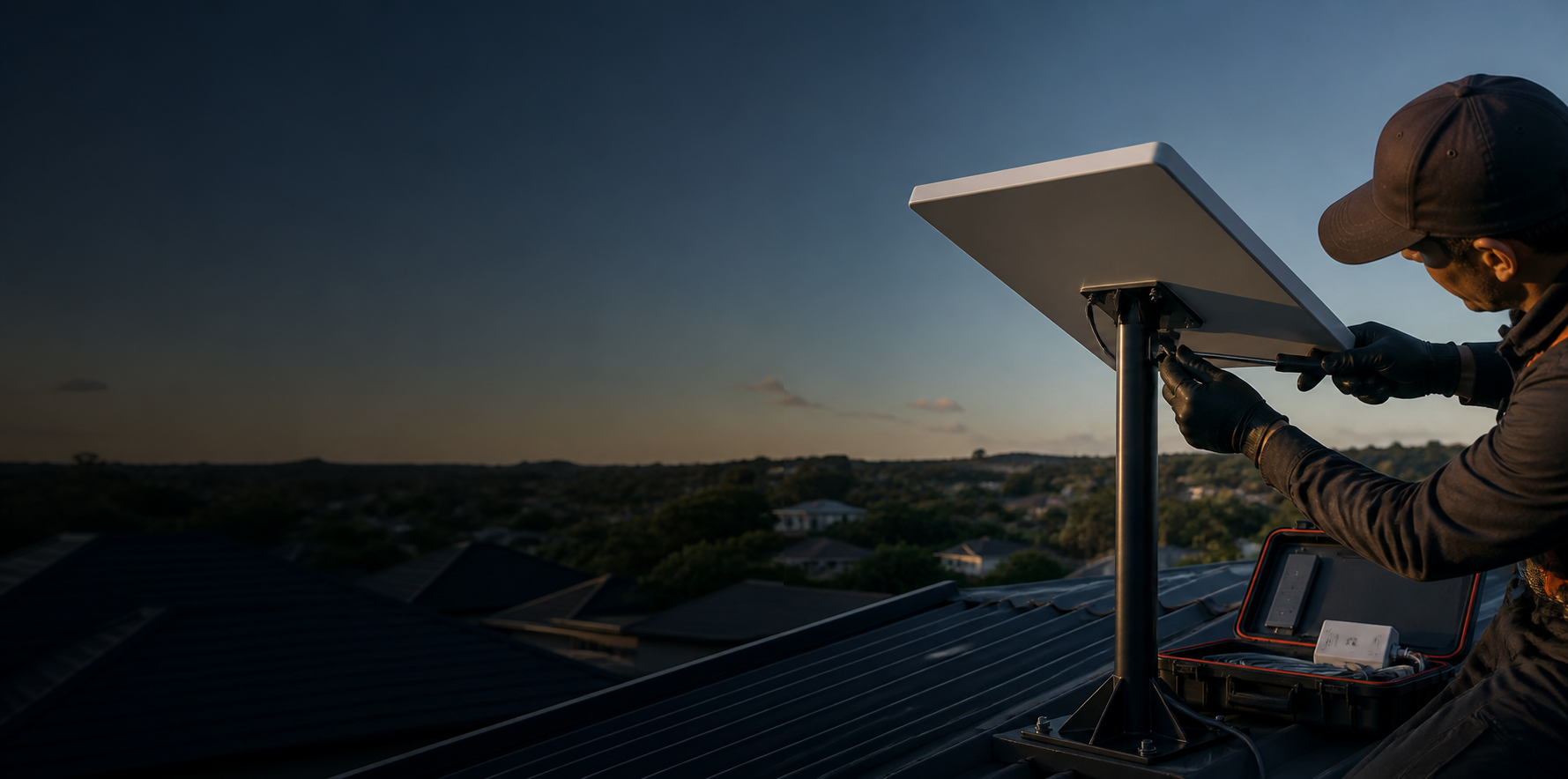
Although Amazon Leo’s final installation kit details for Kenya are not published, LEO satellite systems generally need a clear view of the sky, a secure mount, safe cable routing, reliable power, and a good router position. Sites with trees, tall buildings, steep roofs, weak power, or long distances between buildings require more planning. This is especially true in rural compounds, guest houses, farms, and schools.
Installation planning should include weather exposure, theft risk, maintenance access, and grounding. Kenya has areas with intense sun, heavy rain, lightning risk, dust, wind, and unstable grid power. A durable installation is more than placing a dish on the roof. It includes brackets, cable protection, surge protection, UPS or inverter backup, and a network layout that reaches the users who need service.
Our existing guides for rural homes and farms, businesses, shops, and offices, and Kisumu installations show the same planning discipline that future Amazon Leo customers should use. Whether the kit is Starlink or Amazon Leo, the local environment determines the quality of the final connection.
Service planning for homes, schools, and businesses
A home should start by listing the number of users, streaming habits, remote work needs, and WiFi coverage zones. A school should list classrooms, admin offices, labs, device counts, and online learning needs. A business should list POS systems, CCTV, staff devices, guest WiFi, cloud tools, and backup requirements. These details help determine whether one terminal is enough or whether a more advanced network design is required.
It is also important to separate internet access from WiFi distribution. Amazon Leo may bring the link to the premises, but your router, mesh units, switches, and access points distribute it. A poor indoor network can make a fast satellite link feel slow. Before installing any satellite internet service, map the building and decide where users actually need coverage.
For users who want to buy available equipment today, visit the shop or review Starlink Kenya packages. If you are specifically waiting for Amazon Leo, use the waiting period to prepare the site, compare total costs, and monitor official Kenya availability. That preparation will shorten installation time when the service opens.
Amazon Leo versus current options
Fibre is often the best option where it is stable, affordable, and already installed. Mobile data is convenient and can be very fast in strong coverage areas. Starlink is currently the best-known LEO satellite option for many Kenyan users. Amazon Leo may add competition and possibly new pricing or enterprise features. The right choice depends on location, budget, uptime need, and support expectations.
For a direct comparison, read Compare Starlink with Amazon Leo. When the Amazon Leo service in Kenya becomes official, the comparison should be updated with real plan prices, speeds, hardware costs, installation costs, support terms, and any data policies. Until then, the comparison is mostly about expected positioning and published technology details.
Do not choose an internet service only because the brand is large. Choose based on whether it solves your specific problem. A Nairobi apartment, a Maasai Mara camp, a Kisumu office, a Turkana project site, and a Kiambu farm may all need different designs. Satellite internet is powerful, but it still needs proper planning and honest expectations.
Bottom line for Kenya
The bottom line is that amazon leo internet service in Kenya is promising but not yet fully announced for public Kenyan orders as of 2 June 2026. The network is advancing, Amazon has published enterprise technology details, and local interest is high. Kenyan users should follow official updates, compare current options, and prepare sites where satellite internet is likely to be useful.
If you need help evaluating current connectivity, start with Satellite Internet Installers or contact the team through the contact page. If you are preparing for Amazon Leo, collect your location, building details, user count, power situation, and current internet pain points. Those details will make the final recommendation more accurate when service availability is confirmed.
Regulatory and support questions to watch
For amazon leo internet service in Kenya to become a dependable product, availability must align with local rules and support. Customers should watch for official service terms, equipment authorization, import or distribution channels, consumer support contacts, and business support options. A service can have impressive satellites and still be difficult for customers if support, billing, or replacement equipment is unclear. This is especially important outside major towns, where downtime can take longer to diagnose.
Support expectations should be written before purchase. A home may accept basic support if the service is affordable. A school, clinic, lodge, or business may need faster response and backup planning. Some sites may keep mobile data or fibre as failover. Others may use two satellite links if downtime is very expensive. Amazon Leo may eventually offer different service tiers, but Kenyan buyers should compare those tiers against the operational risk at the property.
Local service design after launch
Once Amazon Leo becomes officially available, the installation conversation should move from general excitement to design. The installer should identify the best dish location, confirm cable entry points, plan router placement, and decide whether the site needs mesh WiFi, access points, network switches, or outdoor coverage. The service should also be documented so future support is easier. Good documentation includes the mount location, cable path, power backup details, router credentials, and network map.
This is particularly useful for organizations with staff turnover. A hotel manager, school administrator, or farm supervisor may change, but the internet system must remain understandable. Written installation notes reduce guesswork when troubleshooting. They also help decide whether Amazon Leo should be the primary connection, a backup connection, or one link in a larger network. Service quality depends on both the provider and the way the site uses the connection.
Questions Kenyan customers should ask before ordering
Before ordering, Kenyan customers should ask whether the service address is officially supported, which terminal is included, what the monthly plan allows, how support is handled, and whether the installation quote includes mounting, cabling, and power protection. These questions keep the buying process practical. They also make it easier to compare Amazon Leo with fibre, mobile internet, and Starlink without focusing only on brand names.
FAQs
Is amazon leo internet service in Kenya available now?
As of 2 June 2026, Amazon has not announced full public Kenya availability for Amazon Leo. Users should verify through official Amazon channels before paying for service.
Who will benefit most from Amazon Leo in Kenya?
Remote homes, farms, lodges, schools, county sites, construction projects, and businesses with weak fibre or mobile coverage may benefit most.
Will Amazon Leo replace fibre in Kenya?
Not everywhere. Fibre may remain better where it is stable and affordable. Amazon Leo is likely to be strongest where terrestrial networks are unavailable or unreliable.
Can installers prepare a site before Amazon Leo launches?
Yes. Installers can assess sky visibility, mounting options, power backup, cable routing, and WiFi coverage before the service becomes orderable.
