Choosing the best Starlink kit for business in Kenya is not just a question of buying the most expensive hardware. The right answer depends on the size of the business, the number of users, the location, the applications being used, and how much downtime the organization can tolerate. A small law office in Nairobi does not need the same setup as a remote safari lodge, a county hospital, a construction camp, a school, a farm office, or an enterprise branch with dozens of staff and guest users. The best Starlink kit is the one that gives the business enough capacity, reliability, installation quality, and support without paying for features it will never use.
For most serious business users in Kenya, the best overall choice is an enterprise or high-performance Starlink setup paired with a priority-style business service plan and professional installation. This is the stronger option for hotels, schools, NGOs, industrial sites, remote offices, hospitals, government facilities, lodges, and organizations that depend on cloud systems every day. For smaller offices with moderate usage, a Standard Gen 3 rectangular kit can still be a good business solution if it is installed well and connected to proper Wi-Fi or routing equipment. For mobile teams and temporary project sites, a portable or roam-ready kit may be more practical than a fixed enterprise installation.
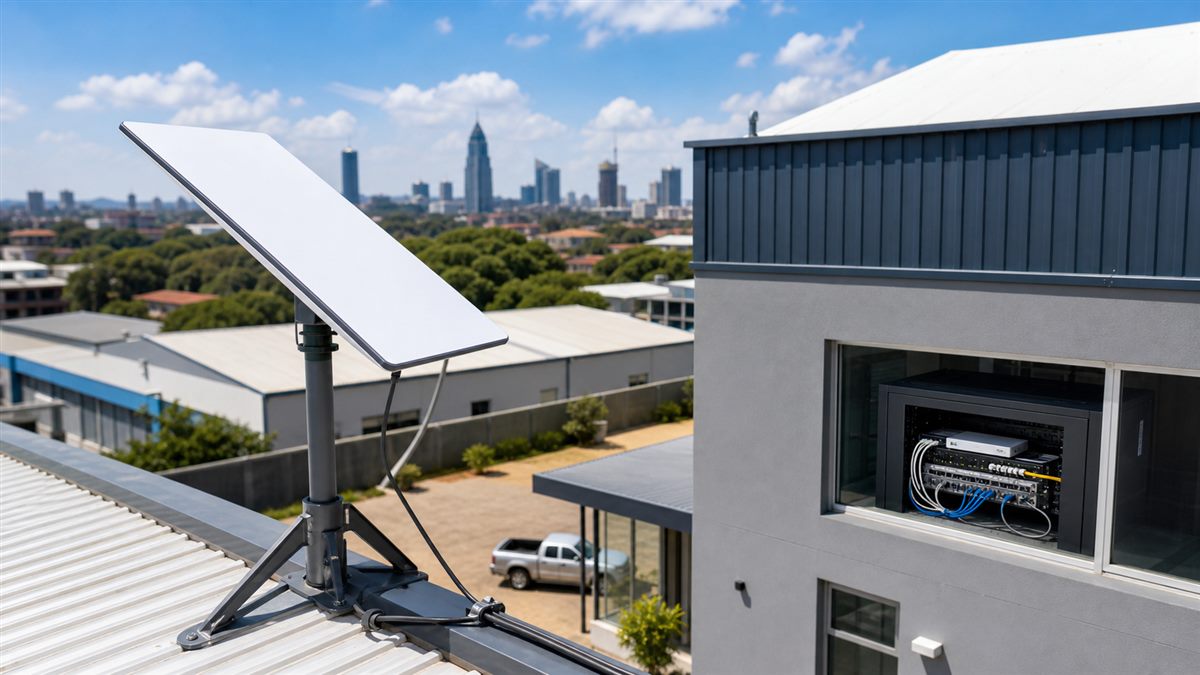
This guide compares the main Starlink kit options for Kenyan businesses, explains when each one makes sense, and gives a practical recommendation for different types of organizations. It also includes the external resources requested for package and buying context: Orbitlink Solutions on Starlink Kenya packages, Starlite Internet Kenya on purchasing Starlink bundles, Starlink Nairobi Installers on Starlink in Kenya, Spacelink Kenya articles on Starlink packages, and the Starlink Enterprise Kit page from Starlink Kenya Installers.
The Short Answer: Best Kit by Business Type
If you want a quick answer, the Enterprise or High Performance category is the best Starlink kit for demanding business use in Kenya. It is the better choice when the internet connection supports many users, revenue systems, guest Wi-Fi, remote operations, security cameras, cloud software, or critical communication. The Standard Gen 3 kit is best for smaller businesses that need reliable broadband but do not have heavy traffic. The Mini or mobile-oriented kit is best for backup, field work, travel, and temporary projects rather than large permanent networks.
| Business type | Best kit choice | Why it fits |
|---|---|---|
| Small office, shop, clinic, professional firm | Standard Gen 3 rectangular kit | Good balance of cost, speed, and simplicity for moderate users |
| Hotel, lodge, school, NGO office, hospital, large branch | Enterprise or High Performance kit | Better for many users, heavier traffic, and uptime-sensitive work |
| Construction team, mobile clinic, events, field project | Roam or portable-ready kit | Useful where the business location changes |
| Fiber backup for urban office | Standard Gen 3 or Enterprise depending on risk | Works well with a dual-WAN router for automatic failover |
| Mission-critical operations | Enterprise kit with priority service and managed installation | Best for reliability, support, network design, and scalability |
What Makes a Starlink Kit Good for Business?
A business kit must do more than pass a speed test. It should stay stable under real workloads. A business may have staff laptops, mobile phones, POS terminals, accounting software, CCTV, printers, VoIP phones, smart TVs, booking systems, cloud backups, security devices, and guest Wi-Fi all sharing the same connection. If the kit cannot handle the load, the company may experience slow payments, dropped video calls, buffering, poor guest reviews, lost productivity, and support complaints.
The best Starlink kit for business in Kenya should meet five conditions. First, it should have enough capacity for the number of users and devices. Second, it should support the right service plan, especially priority service if the site is busy. Third, it should be installed where the rectangular dish has a clear sky view with no trees, buildings, tanks, poles, or roof structures blocking the satellite path. Fourth, it should integrate with proper business networking equipment, not just rely on one router placed in a random office. Fifth, it should have support for maintenance, billing, account changes, cabling issues, and future expansion.
Many complaints about Starlink performance are not caused by the satellite link itself. They are caused by poor Wi-Fi design, weak power backup, bad dish placement, exposed cabling, a congested router, or too many users on one unmanaged network. A good business kit is therefore a combination of hardware, plan, mounting, cabling, routing, Wi-Fi coverage, and support.
Option 1: Standard Gen 3 Rectangular Kit
The Standard Gen 3 rectangular kit is often the best entry-level business choice in Kenya. It suits small to medium offices that need a dependable connection for email, browsing, WhatsApp Business, cloud accounting, video meetings, CRM systems, file sharing, and online payments. It is also a sensible backup option for a business that already has fiber but wants protection against outages.
The main advantage of the Standard Gen 3 kit is value. It gives many businesses enough performance without the cost of enterprise hardware. It is also easier to deploy, easier to mount, and widely understood by installers. For a small office with five to twenty users, it may be all that is needed, especially if the site uses business-grade access points and does not overload the connection with uncontrolled guest streaming.
The weakness is that the standard kit is not always the best choice for high-density environments. If a hotel wants to serve many rooms, or a school wants to connect several labs, or a lodge wants to run staff systems and guest Wi-Fi at the same time, the standard kit may become the limiting point. It can still work as part of a careful network, but the business should consider whether a higher-performance or priority setup would give a better long-term result.
Option 2: Enterprise or High Performance Kit
The Enterprise or High Performance category is the strongest recommendation for businesses that treat internet as operational infrastructure. The Starlink Enterprise Kit page positions this type of solution for large organizations, priority bandwidth, high-capacity use, professional deployment, and demanding environments. That is exactly the type of business where a cheaper kit can become expensive if it causes downtime or customer complaints.
This is the best Starlink kit for hotels, lodges, schools, campuses, hospitals, government offices, logistics sites, security operations, remote industrial sites, and NGOs with many users. It is also a strong option for businesses in remote counties where Starlink will be the primary internet connection rather than a backup. The better hardware and stronger deployment approach are especially useful where the dish is exposed to weather, power variation, many connected devices, and heavy daily use.
The enterprise route should not be judged only by the kit price. It usually makes sense when paired with proper installation, a business router or firewall, structured cabling, access points, bandwidth management, guest network controls, and support. In a hotel, this means the reservation desk and payment systems can be protected from guest Wi-Fi traffic. In a school, the admin network can be separated from student devices. In an NGO office, operational systems can stay usable even when many staff are online. In a remote lodge, the connection can be distributed across reception, rooms, staff housing, and outdoor areas in a controlled way.
Option 3: Mini or Portable Kit
The Mini or portable style of Starlink kit is not usually the best primary business kit for a permanent high-demand site, but it can be the best kit for mobility. Businesses that move from site to site may value portability more than raw capacity. Examples include road contractors, research teams, film crews, mobile clinics, outdoor events, emergency response teams, sales teams, and consultants working in areas with weak mobile data.
For these users, the best kit is the one that can travel, be powered easily, and be set up quickly. A portable Starlink kit can help a field team submit reports, hold video calls, access cloud files, process payments, or coordinate logistics from a temporary location. It can also work as an emergency backup device for a business that does not want to move its main Starlink installation.
The tradeoff is that a portable kit should not be expected to perform like a permanent enterprise installation serving dozens of users. If a business has a fixed site with heavy demand, the portable option is a supporting tool rather than the main solution.
Service Plan Matters as Much as the Kit
Many buyers focus on hardware and forget the service plan. That is a mistake. The same physical kit can feel very different depending on the plan, the level of priority data, congestion, and the network design behind it. Kenya-focused package pages such as Orbitlink Solutions’ Starlink packages guide and Spacelink Kenya’s Starlink package articles are useful for comparing plan categories and local buying considerations.
For a small business, a standard fixed service may be enough. For a busy organization, priority service is usually more appropriate because the business needs predictable performance during working hours and peak usage. For a mobile business, a roam or portable plan may matter more than fixed-site performance. For an enterprise, the plan should be selected after estimating user numbers, data-heavy applications, uptime needs, and whether the connection is primary or backup.
The Starlite Internet Kenya bundle guide also highlights a key point for Kenyan buyers: Starlink is generally managed through subscriptions rather than the daily and weekly bundle style that many people associate with mobile networks. Businesses should therefore budget monthly, confirm billing arrangements, and make sure someone is responsible for account management.
Installation Quality Can Change the Result
The best Starlink kit can perform badly if it is installed poorly. The rectangular dish needs a clear view of the sky. It should not be placed where nearby trees, water tanks, adjacent buildings, roof ridges, metal structures, or signage block the satellite path. A proper installer should perform an obstruction check before final mounting. They should also consider cable routing, waterproofing, grounding, surge protection, router placement, and how the connection will reach the users inside the building.
The Starlink Nairobi Installers guide on Starlink in Kenya is useful because it emphasizes local availability, installation, and package selection. In the Kenyan context, installation conditions can vary widely. A Nairobi office roof is different from a mabati-roof rural school, a lodge in a conservancy, a windy hilltop, or a coastal property with salt air. Mounting hardware should match the site, not just the kit.
For business use, the Starlink router should often feed a separate business network. This may include a firewall, managed switch, indoor and outdoor access points, VLANs, guest Wi-Fi, staff Wi-Fi, CCTV network separation, and bandwidth limits. The goal is to make sure the business systems remain stable even when many users are connected.

Best Kit for Hotels and Lodges
For hotels, lodges, camps, and resorts, the best Starlink kit is usually the Enterprise or High Performance option with priority service. Hospitality sites have two competing needs: operational systems and guest experience. The business must run reservations, payments, staff communication, supplier communication, security cameras, and management systems. Guests also expect Wi-Fi for messaging, video calls, social media, streaming, and remote work.
A Standard Gen 3 kit may work for a small lodge with a limited number of rooms, but larger properties should not build their entire guest experience around a basic router. The better approach is an enterprise-grade Starlink link, a router that can manage bandwidth, and access points placed around the property. Guest Wi-Fi should be separated from the office network. Staff systems should have priority. Streaming can be limited where necessary. This is how a hotel turns Starlink from a simple internet link into a business-grade service.
Best Kit for Schools and Training Centers
Schools and training centers need reliable access for learning platforms, research, administration, online exams, parent communication, and teacher resources. The best kit depends on the number of learners and devices. A small private school office may work with Standard Gen 3. A larger school, college, or training center should consider Enterprise or High Performance hardware with managed access points and content controls.
The kit should be installed in a way that supports coverage across offices, classrooms, labs, and teacher areas. The school should separate admin devices from student traffic. If students are allowed to connect personal devices, bandwidth management becomes important. Without controls, a few users can consume the connection and make the system feel slow for everyone else.
Best Kit for Remote Offices, NGOs, and Field Operations
For a fixed remote office, the best option is usually an enterprise or high-performance setup if the site has many staff or critical reporting systems. For temporary field teams, a portable or roam-ready kit is often better. NGOs and project teams should think carefully about whether the kit will stay in one place or move frequently. A fixed kit can be installed better and integrated into a stronger local network. A portable kit gives flexibility when projects shift from one county to another.
Power backup is especially important for remote operations. If the site depends on solar, generator, inverter, or battery systems, the Starlink setup should be included in the power plan. The internet connection is only reliable if the dish, router, switches, and access points remain powered.
Best Kit for Shops, Clinics, and Small Offices
Small businesses should not automatically overbuy. A Standard Gen 3 rectangular kit can be the best Starlink kit for many shops, clinics, law firms, accounting offices, pharmacies, and small agencies. It is usually enough for online systems, communication, browsing, cloud software, and moderate video calling. If the business already has fiber, Starlink can also be used as a backup connection through a dual-WAN router.
The most important upgrade for these businesses is often not the kit itself but the network around it. A good router, a UPS, and one or two quality access points may improve the experience more than buying a bigger Starlink package. If the site grows or starts serving many customers over Wi-Fi, then an upgrade to a priority plan or higher-performance kit can be considered.
Primary Internet or Backup Internet?
The best kit also depends on whether Starlink will be primary or backup. If Starlink is the primary connection, choose enough capacity for the whole site and invest in installation. If it is backup for a fiber-connected office, the Standard Gen 3 kit may be enough unless the organization is large or mission-critical. For backup use, the key device is a dual-WAN router that automatically switches from fiber to Starlink when the main ISP fails.
For businesses in Kenya, backup internet is not a luxury. Fiber cuts, mobile congestion, ISP downtime, and power issues can disrupt operations. A backup Starlink connection can keep card payments, cloud software, customer support, security monitoring, and management communication online during an outage. In that case, the best kit is the one that can carry the most important business systems when the primary link fails.
Cost vs Value: How to Decide
The cheapest kit is not always the best value. The right way to compare options is to estimate the cost of downtime. If a hotel loses bookings, if a clinic cannot access records, if a shop cannot process payments, or if a field office cannot submit reports, the cost of poor connectivity may exceed the savings from buying a smaller kit. For businesses that depend on uptime, a higher-performance kit and professional installation can pay for itself through reliability.
At the same time, not every business needs enterprise hardware. If the site has few users and Starlink is not carrying mission-critical systems, the Standard Gen 3 kit may be a better financial decision. The best Starlink kit for business in Kenya is therefore not always the biggest kit. It is the kit that matches the workload, risk, and budget.
Final Recommendation
For serious business use in Kenya, the best Starlink kit is the Enterprise or High Performance style kit with priority service, professional installation, and proper business networking. That is the strongest option for hotels, lodges, schools, hospitals, NGOs, remote offices, industrial sites, government facilities, and large branches. It gives the business a better foundation for many users, heavier workloads, and more reliable operations.
For small offices, shops, clinics, and professional firms, the Standard Gen 3 rectangular kit is often the best value. It can deliver strong performance when installed correctly and paired with good Wi-Fi, backup power, and a sensible router. For mobile teams and temporary projects, a portable or roam-ready kit is the practical choice because flexibility matters more than permanent-site capacity.
Before buying, compare current Kenya package details, confirm the service plan, ask about activation and billing, and request an installation quote that includes mounting, cabling, power protection, and network integration. The rectangular dish is important, but the best business result comes from the full setup: the right kit, the right plan, the right mount, the right router, and support from people who understand how Kenyan businesses actually use internet every day.
