Satellite Internet for Hotels, Lodges and Airbnb Properties in Kenya is a practical guide for anyone researching satellite internet for hotels in Kenya. The goal is to help Kenyan buyers understand the real decisions behind satellite broadband: availability, installation quality, WiFi coverage, power backup, monthly plans, support and long-term reliability.
This article focuses on hospitality connectivity guide. It is written for hotel owners, safari lodge managers, Airbnb hosts, campsite operators and coastal villas who want to improve guest WiFi, booking systems, point-of-sale, staff communication and backup connectivity. It includes internal links to relevant resources on Satellite Internet Installers and external references requested for wider comparison.

Why this topic matters in Kenya
satellite internet for hotels in Kenya has become a practical conversation because many Kenyan buyers no longer judge internet only by headline speed. They judge it by whether it works at 8 p.m., whether video calls remain stable, whether a payment terminal reconnects after a power interruption, and whether a guest, student, nurse or farm manager can keep working without waiting for a town-based line to arrive. The value of satellite broadband is strongest where the physical geography, construction pace or business model makes ordinary connectivity unreliable.
The Kenyan market is also changing because low earth orbit satellite systems reduce the old expectation that satellite internet must always feel slow or reserved for large organizations. A modern satellite kit still needs clear sky, stable power, proper mounting and sensible WiFi design, but the user experience can be suitable for cloud apps, streaming, online classes, remote work, booking systems and many everyday business tasks. That shift explains why hotel owners, safari lodge managers, Airbnb hosts, campsite operators and coastal villas are evaluating satellite connectivity as a serious option rather than a last resort.
Who should consider satellite internet first?
The best candidates are sites where downtime costs more than the monthly subscription. That includes farms that send orders by WhatsApp and email, lodges that depend on online reviews and booking platforms, offices that run cloud accounting, schools using digital learning platforms, clinics using electronic records, and households where remote work is part of daily income. For these users, improve guest WiFi, booking systems, point-of-sale, staff communication and backup connectivity, not simply chase the cheapest advertised package.
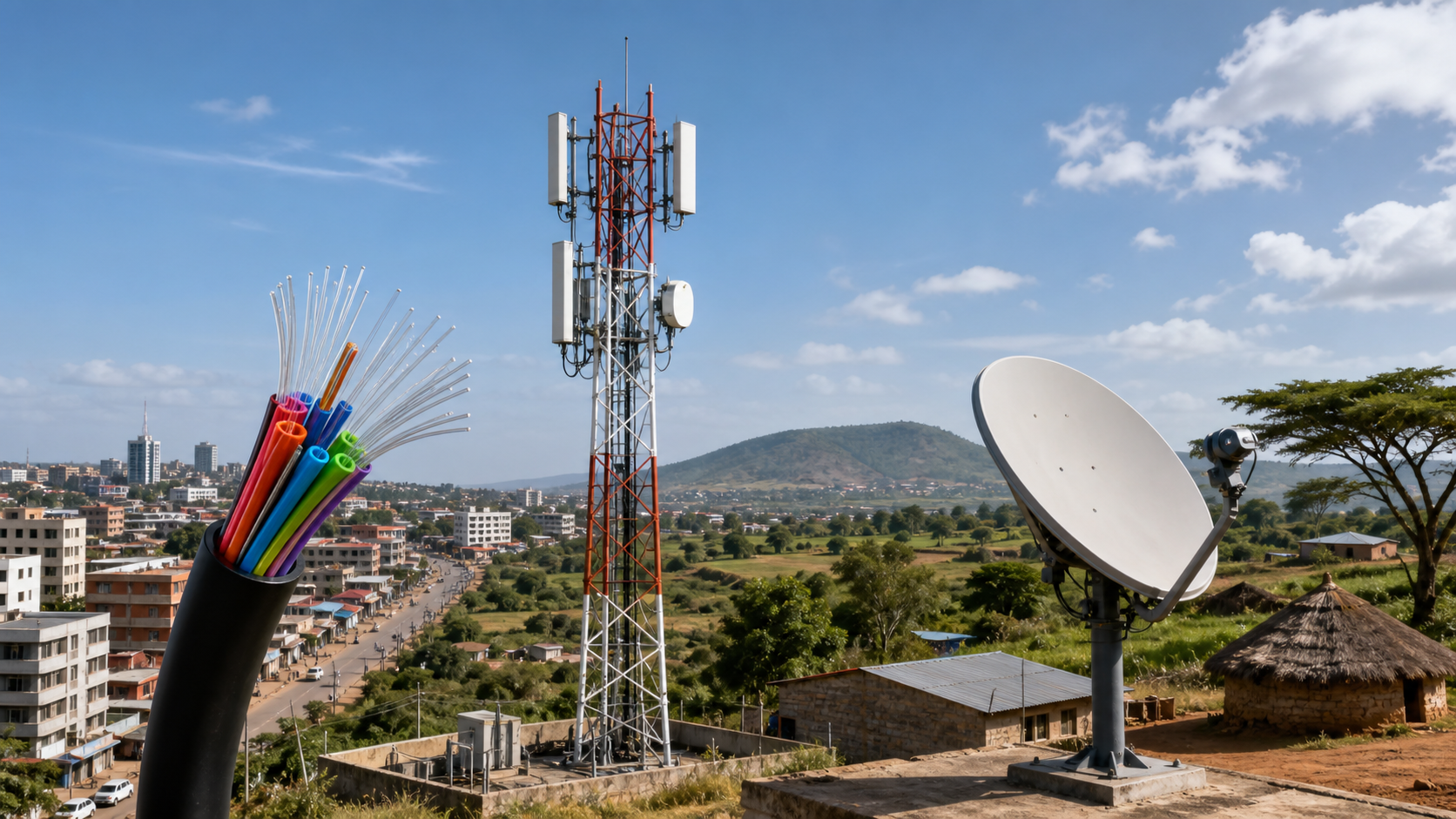
Satellite internet is also useful as a backup connection in places that already have fiber or 5G. A business in Nairobi, Kiambu or Mombasa may use fiber as the primary line and satellite as failover. A rural site may reverse that approach and use satellite as the main line with mobile data as a backup. The right design depends on risk, user count, terrain, expected growth and the cost of being offline during busy hours.
How satellite internet works in simple terms
A satellite internet kit communicates with satellites overhead and then routes traffic through ground infrastructure connected to the wider internet. The user sees a dish or flat antenna, a router, power equipment, cable runs and sometimes extra access points. The invisible part is the network design that decides where the router sits, how WiFi reaches rooms or outdoor areas, and how power is protected during outages or surges.
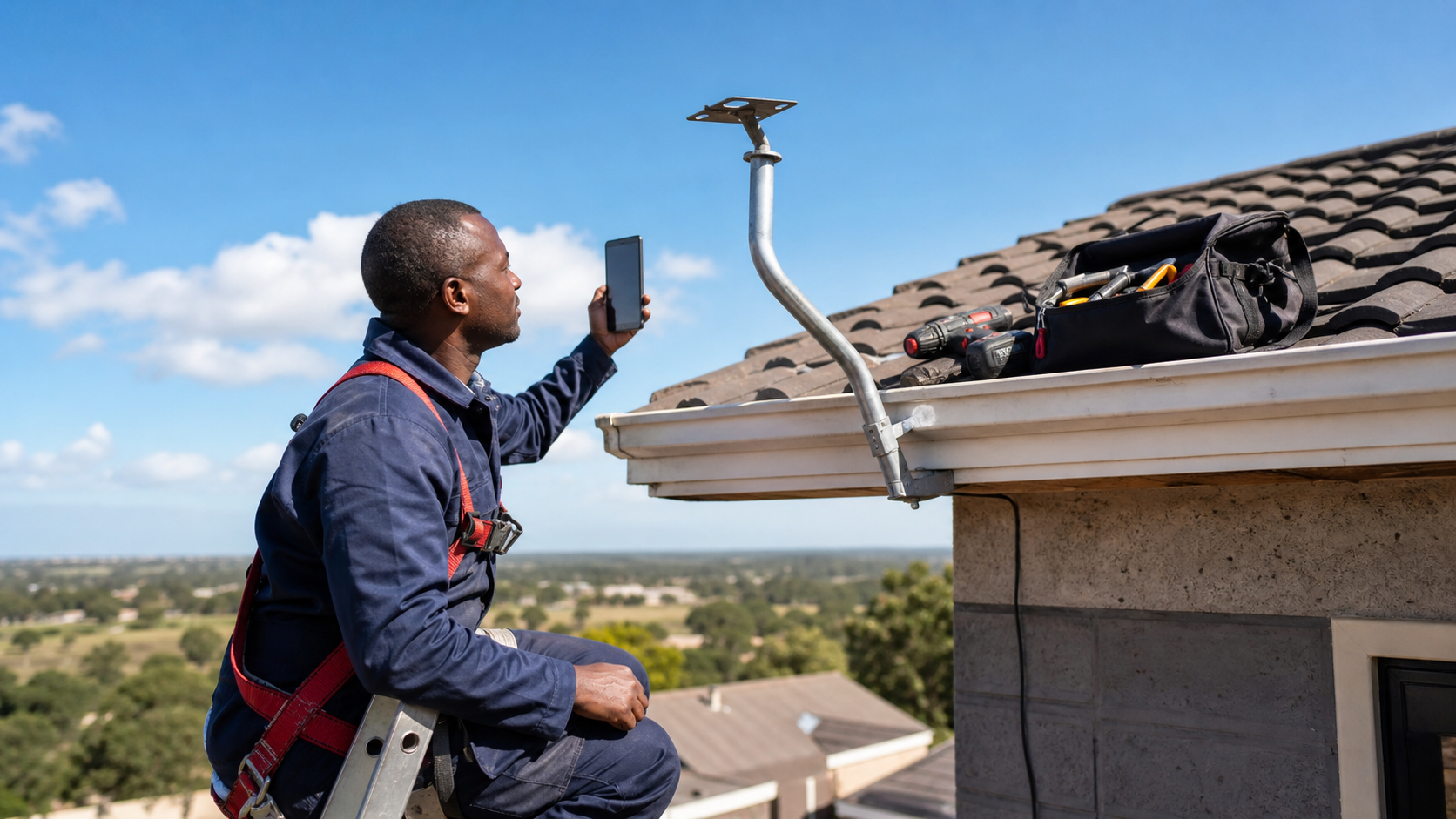
Because the dish needs a clean view of the sky, installation quality directly affects performance. Trees, taller roofs, water tanks, walls and future construction can create obstructions. Even a small obstruction can cause short drops that feel like buffering, failed calls or unstable point-of-sale terminals. A proper site survey is therefore not a cosmetic step; it is the difference between a kit that technically works and a connection that users trust every day.
Installation planning before you buy
Before ordering hardware or booking an installer, map the users, buildings, power points and likely dish locations. A single router may be enough for a small home, but it is rarely enough for a compound, lodge, school or office with thick walls. Think about where people actually use the connection: reception desks, guest rooms, staff offices, classrooms, CCTV points, outdoor seating areas, farm stores and payment counters.
Coverage expectations differ between Nairobi apartments, Kiambu estates, Mombasa coastal buildings, Nakuru farms, Kisumu lakeside homes, and northern counties such as Garissa or Marsabit. Before buying equipment, compare your site with the satellite internet coverage guide and, where relevant, the local installation pages for Nairobi, Mombasa, Nakuru, Kisumu, and Garissa. Good planning also includes cable protection, waterproofing, safe roof access, earthing where appropriate, and a mounting choice that can survive wind and rain. The installation page for Starlink Kenya installation is a useful internal reference for buyers who want to understand the work before a technician arrives.
Cost factors buyers often miss
The monthly plan is only one part of the cost. Buyers should budget for the kit, mounting hardware, poles or brackets, cable routing, trunking, power backup, surge protection, mesh nodes, outdoor access points and possible travel for remote installations. The lowest quote may omit several of these items, which is why two installation prices can look very different while describing very different scopes of work.
A better budget separates one-time setup from recurring service and from optional network upgrades. Visit the pricing page and the Starlink Kenya prices guide when comparing the cash needed upfront and the monthly commitment after activation. For large sites, ask for a written scope that states what rooms, buildings or outdoor zones will be covered so the quote can be judged fairly.
Performance expectations in real life
Performance depends on the satellite network, the plan, congestion, weather, obstruction level, router placement and the number of active users. A cleanly installed system can feel fast for browsing, video meetings, streaming and cloud apps, but poor WiFi design can make a good satellite link feel bad inside the building. When a user complains that satellite internet is slow, the root cause may be WiFi range, interference, overloaded devices or a weak power setup rather than the satellite link itself.
For homes, the usual goal is stable browsing, streaming, learning and work calls. For businesses, the target is uptime, coverage in the right working areas, and enough capacity for staff and customers. For lodges and schools, user management may matter as much as speed, because unlimited guest or student devices can overwhelm any connection if there are no sensible limits.
Internal network design
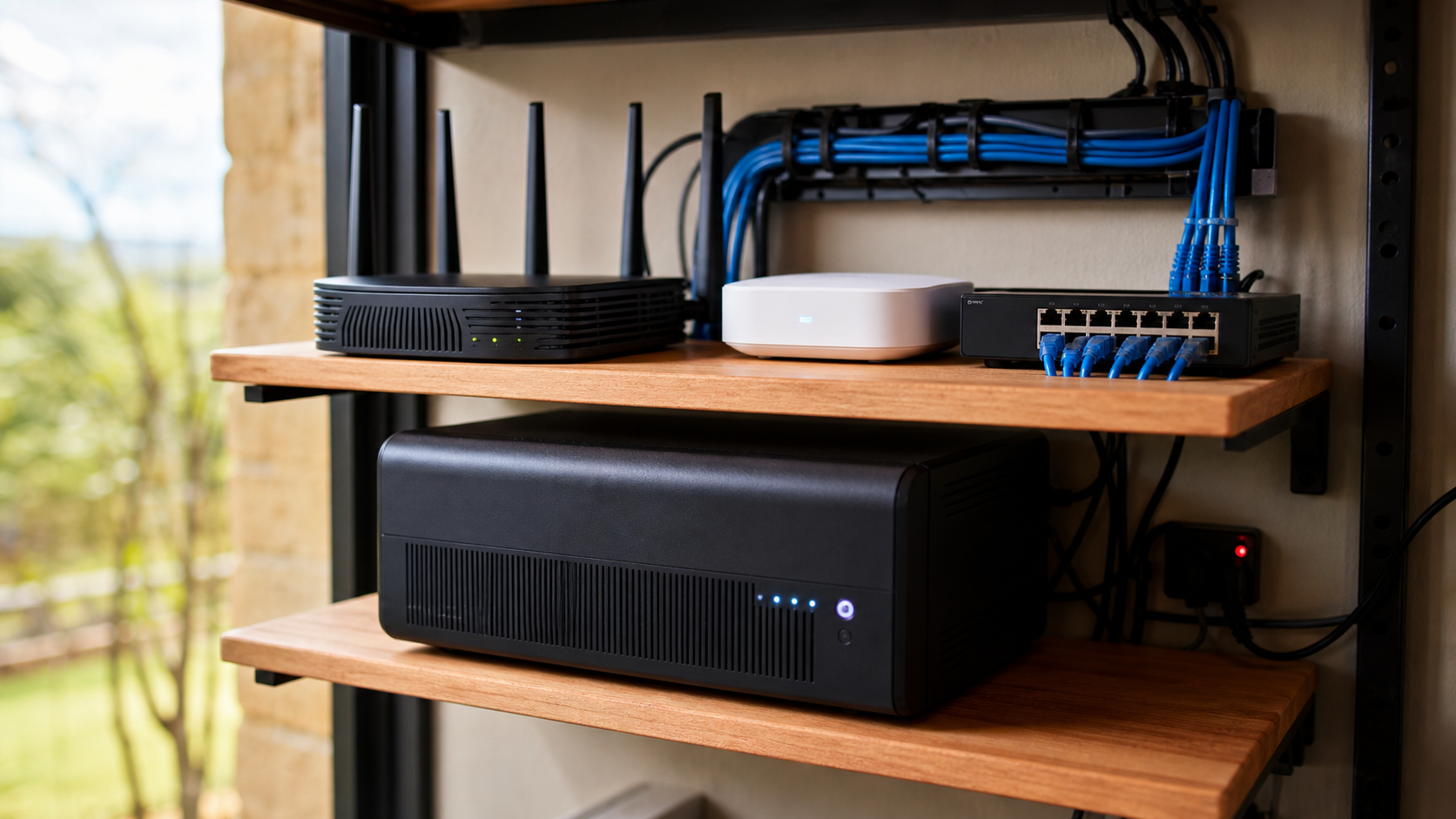
The satellite kit gets internet to the site; the internal network distributes it. That second part deserves attention. Thick stone walls, mabati roofs, reinforced concrete, long corridors, guest cottages and separated classrooms all reduce WiFi quality. Mesh systems can help homes, while business sites may need wired access points, outdoor-rated equipment and separate networks for staff, guests, CCTV and administration.
A clean design also improves security. Guest WiFi should not expose office printers, CCTV recorders, payment devices or school administration computers. For hospitality, a captive portal or managed guest password may be useful. For farms and clinics, private operational devices should be separated from public browsing. The services page is a useful place to understand installation and network support options beyond the dish itself.
Power backup and protection
Power is one of the most practical issues in Kenya. A satellite kit and router cannot provide stable internet when voltage is unstable or the site loses electricity frequently. A UPS can keep the dish and router running during short outages, while a larger inverter or solar-backed system may be needed for lodges, farms, schools and remote offices. Surge protection is also important because storms and poor power quality can damage equipment.
Plan backup power around the entire network, not just the satellite router. If extra access points, switches or CCTV devices lose power, users may still experience downtime even though the dish is online. Label plugs, avoid overloaded extensions, and keep equipment in a ventilated, secure location away from water and dust. These details sound basic, but they are often the difference between a professional setup and a fragile one.
Best use cases
Maasai Mara lodges, Diani villas, Naivasha cottages, Lamu guesthouses, Nanyuki camps, Mombasa apartments and remote conservancies are all examples where satellite can solve a real access problem. It is strongest where installation can be done with a clear sky view and where the value of reliable connectivity is visible in daily operations. It is weaker where the site has no safe mounting position, no stable power, very heavy multi-user demand without network controls, or a strict need for ultra-low latency specialist applications.
Common use cases include remote work, Zoom and Teams meetings, cloud accounting, school research, digital exams, telemedicine support, CCTV viewing, farm sensor dashboards, M-Pesa-enabled sales, online bookings, guest WiFi, inventory systems and communication with suppliers. The technology should be matched to the workflow; a small household and a 60-room lodge should not be planned the same way.
Buying checklist
A useful checklist starts with location, sky view, power, user count, buildings, budget, mounting preference, support expectations and future expansion. Ask whether the installer will test obstruction, confirm cable routes, secure the mount, configure WiFi, name networks clearly, explain the app or dashboard, and document the final setup. Ask what happens if speeds are poor after installation or if a roof mount needs adjustment.
- Confirm the exact site address and whether service is available before paying.
- Check whether the quoted price includes mounting hardware and cable management.
- Ask how many rooms, buildings or outdoor areas the WiFi design covers.
- Plan UPS or inverter backup before relying on the connection for work.
- Keep login details, warranty information and support contacts in one place.
Common mistakes to avoid
The first mistake is buying a kit before checking whether the site has a suitable dish location. The second is placing the router wherever the cable happens to enter the building instead of where users need coverage. The third is expecting one router to serve a compound, hotel or school without additional access points. The fourth is ignoring power backup and then blaming the internet during every outage.
Another mistake is choosing an installer only by the cheapest labor fee. Good installation protects the roof, the cable, the equipment and the user experience. A poor installation can create leaks, unstable mounts, exposed cables, weak WiFi and repeated callouts. For buyers who want guided help, the contact page is the right place to request a site-specific recommendation.
How to compare providers and related resources
Satellite internet options are expanding, and buyers should compare availability, plan terms, support, hardware, installation quality and total cost. Starlink is already a major reference point in Kenya, while Amazon Leo and other low earth orbit services are part of the wider conversation and may depend on regulatory approval, rollout timelines and local commercial terms. The best decision is based on what can be installed and supported at your exact site today, while keeping future options in mind.
For wider market comparison, readers can also review Kenyan satellite internet resources from Starlink Kenya Installers, Satellite Internet Installers, Starlite Internet Kenya, and Amazon Internet Kenya. Internally, compare Starlink Kenya, Amazon Leo Internet Kenya, Starlink Kenya packages, and coverage so the decision is based on location, use case and budget rather than a single headline claim.
Final recommendation
The safest way to approach satellite internet for hotels in Kenya is to treat it as a full connectivity project. The dish matters, but so do the mount, cable, router position, access points, power backup, user policy and support process. Buyers who plan those pieces before installation usually get a more stable experience and spend less time troubleshooting after activation.
For hotel owners, safari lodge managers, Airbnb hosts, campsite operators and coastal villas, the practical next step is to compare coverage, estimate total setup cost, and request an installation scope that fits the site. Start with the satellite internet services overview, check current pricing guidance, and use contact when you need a recommendation for a specific home, farm, lodge, school or business.
Frequently Asked Questions
Is satellite internet for hotels in Kenya available everywhere in Kenya?
Availability and performance should be checked by exact location. Many areas can use satellite internet where there is a clear sky view, but local obstructions, plan availability and installation conditions still matter.
Do I still need an installer if the kit is advertised as self-install?
Self-install can work for simple sites, but professional installation is recommended when roof mounting, long cable routes, multiple buildings, guest WiFi, CCTV, backup power or business continuity are involved.
Can satellite internet replace fiber?
It can replace fiber where fiber is unavailable or unreliable, and it can act as a backup where fiber exists. In dense urban areas with stable fiber, satellite is often best evaluated as resilience or as a solution for buildings that lack good wired service.
What should I check before paying?
Check service availability, clear sky view, total equipment and installation cost, monthly plan, mounting method, power backup, WiFi coverage, warranty and support terms.
A final planning note is to think about growth. Many Kenyan sites start with a small number of users and then add cameras, extra staff devices, guest phones, smart TVs, cloud software, printers and remote monitoring tools. If the first installation leaves no room for expansion, the owner may need to redo cabling, move the router or add access points later. A slightly better design at the beginning is often cheaper than repeated emergency fixes after the service becomes important to daily operations.
Documentation is also part of a professional setup. Keep the account email, serial numbers, router login details, network names, support contacts, mounting photos and power backup information in a safe place. When staff change or a site manager is away, clear documentation helps the next person troubleshoot without guessing. This is especially useful for schools, lodges, NGOs and businesses where several people may depend on the same connection but only one person handled the original purchase.
Security should not be ignored. Change default WiFi names and passwords, create a separate guest network where possible, avoid sharing administrator logins with casual users, and review connected devices from time to time. For businesses, clinics and schools, the internet link should support operations without exposing sensitive systems to every visitor or student phone. Good connectivity is not only about speed; it is also about control, accountability and predictable access.
A final planning note is to think about growth. Many Kenyan sites start with a small number of users and then add cameras, extra staff devices, guest phones, smart TVs, cloud software, printers and remote monitoring tools. If the first installation leaves no room for expansion, the owner may need to redo cabling, move the router or add access points later. A slightly better design at the beginning is often cheaper than repeated emergency fixes after the service becomes important to daily operations.
Documentation is also part of a professional setup. Keep the account email, serial numbers, router login details, network names, support contacts, mounting photos and power backup information in a safe place. When staff change or a site manager is away, clear documentation helps the next person troubleshoot without guessing. This is especially useful for schools, lodges, NGOs and businesses where several people may depend on the same connection but only one person handled the original purchase.
Security should not be ignored. Change default WiFi names and passwords, create a separate guest network where possible, avoid sharing administrator logins with casual users, and review connected devices from time to time. For businesses, clinics and schools, the internet link should support operations without exposing sensitive systems to every visitor or student phone. Good connectivity is not only about speed; it is also about control, accountability and predictable access.
